|

At the beach, the constant is
change:
change of
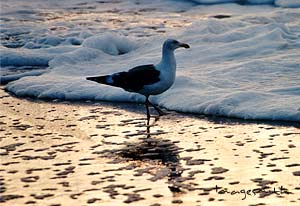
tides, winds, seasons, the shifting of sand or the passing of visiting
birds, seals, or dolphins. Variations in cloud-cover re-tint the
ocean's surface from blue to green or gray. Abundant plankton in
the water can make curling waves glow an electric ice blue after
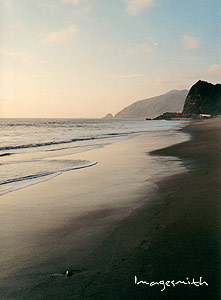
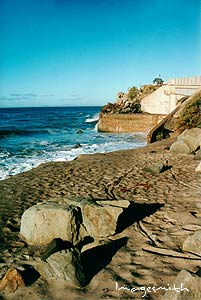
dark. Storms reshape the face of the beach, building up great sand
banks or digging them away to expose piles of underlying boulders.
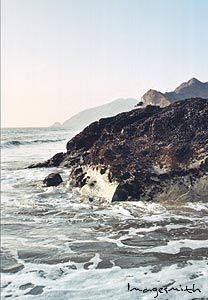
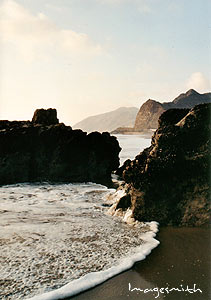
The full moon and the new moon bring extremes of high and low tides that
swallow landmarks or reveal the abundant sea life that usually lies
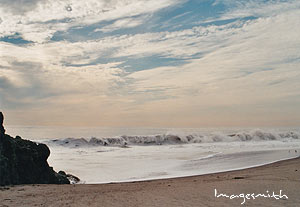
hidden below the surface. Even the waves themselves vary:
now a set of larger, more energetic swells, now a smaller set or perhaps
a pause, as if the sea's breath has caught momentarily.
Each image you
take in at the beach is anchored in time as well as three-dimensional
space. Hold on to the ones that speak to you. In a moment or
an hour, the scene around you will have shifted, like the changing view
in a constantly-turning kaleidoscope.
|
|